
Guest Author | November 29, 2025
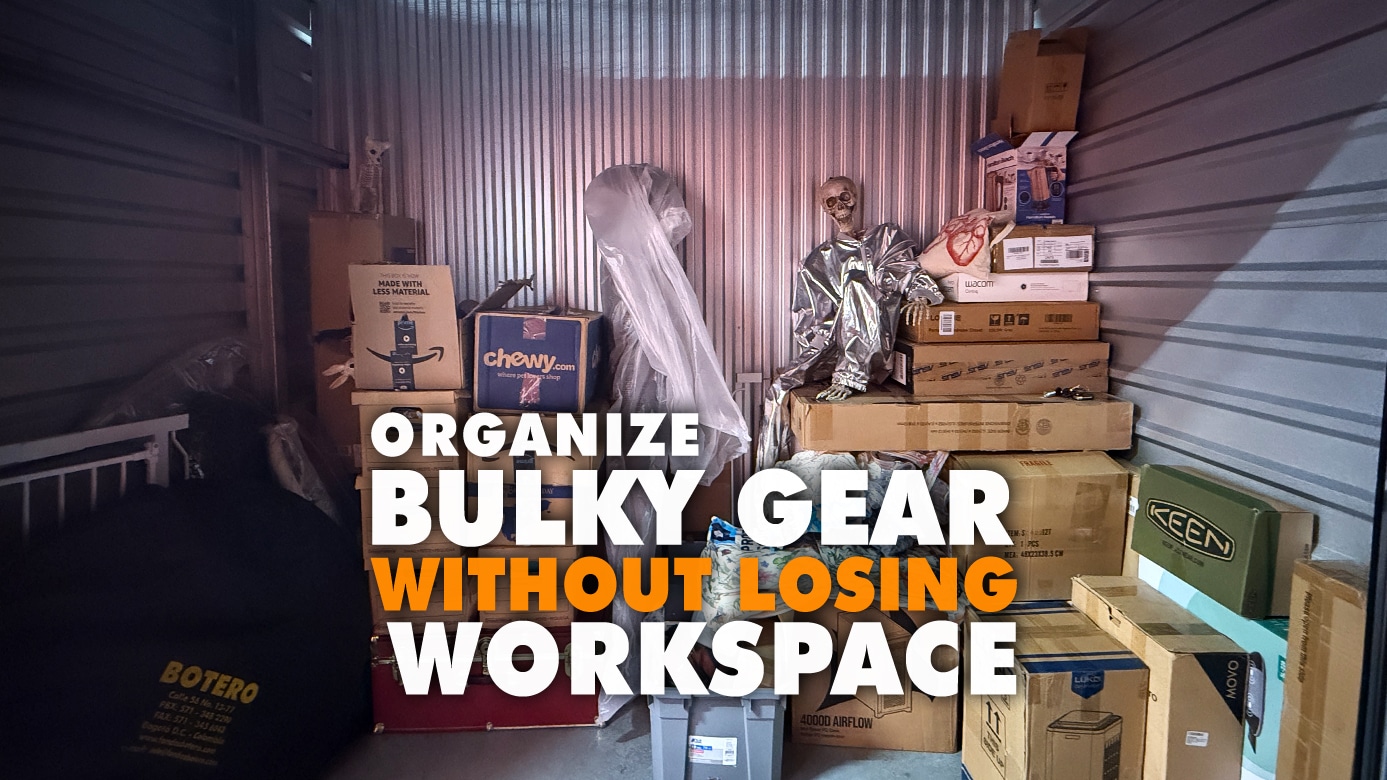

A Practical Way Creatives Organize Bulky Gear Without Losing Workspace
When working on creative projects, you will likely utilize larger pieces of equipment such as lighting, tripods, stands, and so on. However, due to the nature of most creative work with large amounts of equipment, there's usually quite a bit of overlap in what you're going to need and how much space all of these items take up. Too, a lack of organization leads to larger clutter.
Utilizing a simple way to organize bulky tools helps keep them from getting damaged. Additionally, it also separates the necessary items from excess. Plus, when you have the proper storage methods in place that align with your current project, you will have an uncluttered work space. As a result your workspace allows for greater ease and creative flow rather than limiting it.
Why Bulky Gear Takes Over
Bulky creative gear takes over a workspace because most tools are large, oddly shaped, and not easy to stack or hide. A single light stand or backdrop frame can take up more room than expected. In addition, when several projects are happening at once, equipment piles up quickly.
Many creatives keep older tools as backups. Plus, they save props or materials for future ideas. Over time, these habits fill shelves, floors, and corners. As a result it's harder to work comfortably. Understanding why bulky gear spreads so easily is the first step toward getting it under control.
How Equipment Builds Up
Creative projects often require a mix of tools that serve different purposes. One project might need lighting, while another needs props or large canvases. Since these tools don’t fit neatly into drawers, they tend to stay wherever they were last used. This makes the space feel crowded, even if the actual amount of gear isn’t huge.
Quick Q and A
Why does my workspace feel smaller every month?
Because bulky gear slowly expands into available space when it doesn’t have a clear home.
How can I stop this from happening?
Sort your equipment by how often you use it and store only the essential items within arm’s reach.
Separating Daily and Occasional Tools
Separating daily tools from occasional ones helps creatives keep their workspace functional and easy to use. When only the tools you rely on stay in your main work area, you move more freely, think more clearly, and avoid frustration during fast-paced projects. This approach does not limit creativity—it clears the environment so you can focus better.
A Simple Sorting Method
Divide your gear into two groups: daily-use and project-based items.
Daily-use tools include your primary lighting, cameras, brushes, easels, or core design equipment. These should remain near your main workspace.
Project-based tools—such as large props, extra tripods, seasonal materials, or specialty items—can be stored on shelves, in bins, or in a separate corner until needed.
A Practical Perspective
This method works. Because it reduces visual clutter it keeps your focus on the tools you actually use. By removing occasional gear from your immediate workspace, you open up room to move, plan, and create without feeling boxed in.
Smart Storage Strategies
Smart storage strategies help creatives manage bulky gear without crowding their workspace. Because tools vary in size, shape, and fragility, a flexible storage approach keeps everything protected and easy to access.
Using shelves, bins, cases, carts, and even offsite storage can free up valuable room and make your environment more comfortable for daily work.
Creative Gear FAQ
What is the best way to store bulky creative tools at home?
Use clear bins, rolling carts, or wall-mounted racks so large items stay organized and off the floor.
How can I store gear I do not use often but still need to keep?
Place long-term or seasonal items in storage units in Midwest City OK to keep your home workspace open while maintaining access when needed. Of course, you should choose a location that's convenient for you.
Questions About Gear Protection
How do I keep delicate equipment from getting damaged?
Store fragile items in padded cases and keep them separate from heavier tools to avoid accidental pressure or dents.
Workspace Layout Tips
A thoughtful workspace layout makes daily creative work easier by keeping essential items close and overflow gear out of the way. Even small layout adjustments can expand your working area and improve comfort. The goal is to arrange your space so movement feels natural and tools are easy to reach without creating clutter.
Before using the steps below, take a look at the areas where gear tends to gather—behind doors, next to desks, under tables, or in open corners.
Workplace Layout Strategies
- Place daily tools on shelves within arm’s reach.
- Use vertical storage to keep floors open.
- Keep large props in labeled bins along one wall.
- Hang light stands or tripods on sturdy hooks.
- Designate one small zone for active projects only.
After applying these changes, your workspace becomes easier to navigate and far more enjoyable to work in.
Key takeaway summary:
A smart layout keeps your workspace functional by placing essential tools nearby and storing bulky items elsewhere. With vertical shelving, labeled bins, and a defined active zone, creatives maintain clarity, improve focus, and reduce daily clutter without sacrificing the gear they rely on.
Simple Routine Habits
A real example shows how simple habits can help creatives maintain control over bulky gear. One designer worked with lighting kits, oversized canvases, props, and several large storage boxes. Over time, the equipment spread across her entire workspace, making it difficult to move freely or start new projects. She felt frustrated because cleaning up took longer than creating. After reaching out to a fellow designer known for keeping a tidy studio, she discovered a few routines that completely transformed her space.
A Creative Experience
The mentor suggested starting every day with a quick reset and ending the day with a five-minute cleanup. She created specific zones for lighting, props, and canvases so nothing wandered into random areas. Shelves were assigned to daily items, while extra gear was placed into large, labeled bins. Within a month, she noticed her workspace felt larger, her projects ran smoother, and she no longer misplaced important tools. These small shifts helped her stay organized even during busy creative periods.
Expert Insight
A mentor mentioned that when there is an “unfocused” amount of bulky gear it would start to feel overwhelming without a defined home for each item. When people follow predictable routines they don’t allow clutter to build up. Thus, it allows for better organization to occur whereas with less consistent routines, more effort is required to stay organized.
By grouping tools that are similar in nature; returning tools back to their correct place each day; and storing tool boxes once a week, creativity is able to create long-term orderliness. Additionally, focusing on keeping items orderly provides a calmness to the creative workspace, helps protect fragile equipment, and enables a work setting to be perceived as an environment that is ready to receive the next wave of ideas.
Common pitfalls to avoid:
Combining everyday tools with backup gear will result in clutter. Large props stored in hallways create unsafe conditions. Having canvases stored near a water source will destroy the support materials over time. Stacking heavy objects atop fragile tools such as paintbrushes will cause them to break.
Neglecting to perform re-set at the end of each work day will create an excessive amount of clutter. Not reviewing storage boxes weekly will result in items being lost because they remain in storage. Allowing cords to become tangled is unproductive and adds time delays to work flow. Holding onto every single old tool creates a storage challenge.
Final Thoughts
Creatives can protect their workspace and maintain a productive environment by using clear routines, dedicated zones, and simple storage habits. When bulky gear has an organized home, your studio feels open, comfortable, and ready for inspiration.
Start applying one small change today and discover how a practical way creatives organize bulky gear without losing workspace can help you build a cleaner, more efficient creative space.
Speaking of organization, don't forget to keep your photo catalog organized.
Guest Author
November 29, 2025
This article was written by one of our incredible guest authors. If you're interested in writing for WDO Photography please contact WDO Photography. Guest authors are welcome to submit articles written for clients so long as WDO Photography has a chance to vet their products or services.




Read The Latest Photography Articles on the WDO Photography Blog

Infrared Photography Explained: How Camera Conversions Unlock A Hidden World
Infrared photography is a fascinating and visually striking form of photography. It almost feels like a visual trick. Here’s how it works!
read more…

Written by James
on April 2, 2026 at 2:38 pm

Why Your Wildlife Photos Are Not Sharp
Your wildlife photos are not sharp and you don’t know why. It might just be the atmosphere causing this distortion. Watch the video to fix it.
read more…
Written by Don Orkoskey
on April 1, 2026 at 4:48 pm

This Is Why Good Storytelling Makes People Love Your Photos
If you want people to pay more attention to your work then you need to understand how essential good storytelling is to photography.
read more…
Written by Don Orkoskey
on March 31, 2026 at 12:41 pm

The Beginner’s Guide to Shooting in Natural Light Without a Studio
Shooting in natural light can be tricky. The key is understanding how light behaves and learning to use that behavior rather than fight it.
read more…
Written by Guest Author
on March 20, 2026 at 9:38 am
Comments
0 comments