Author: Don Orkoskey
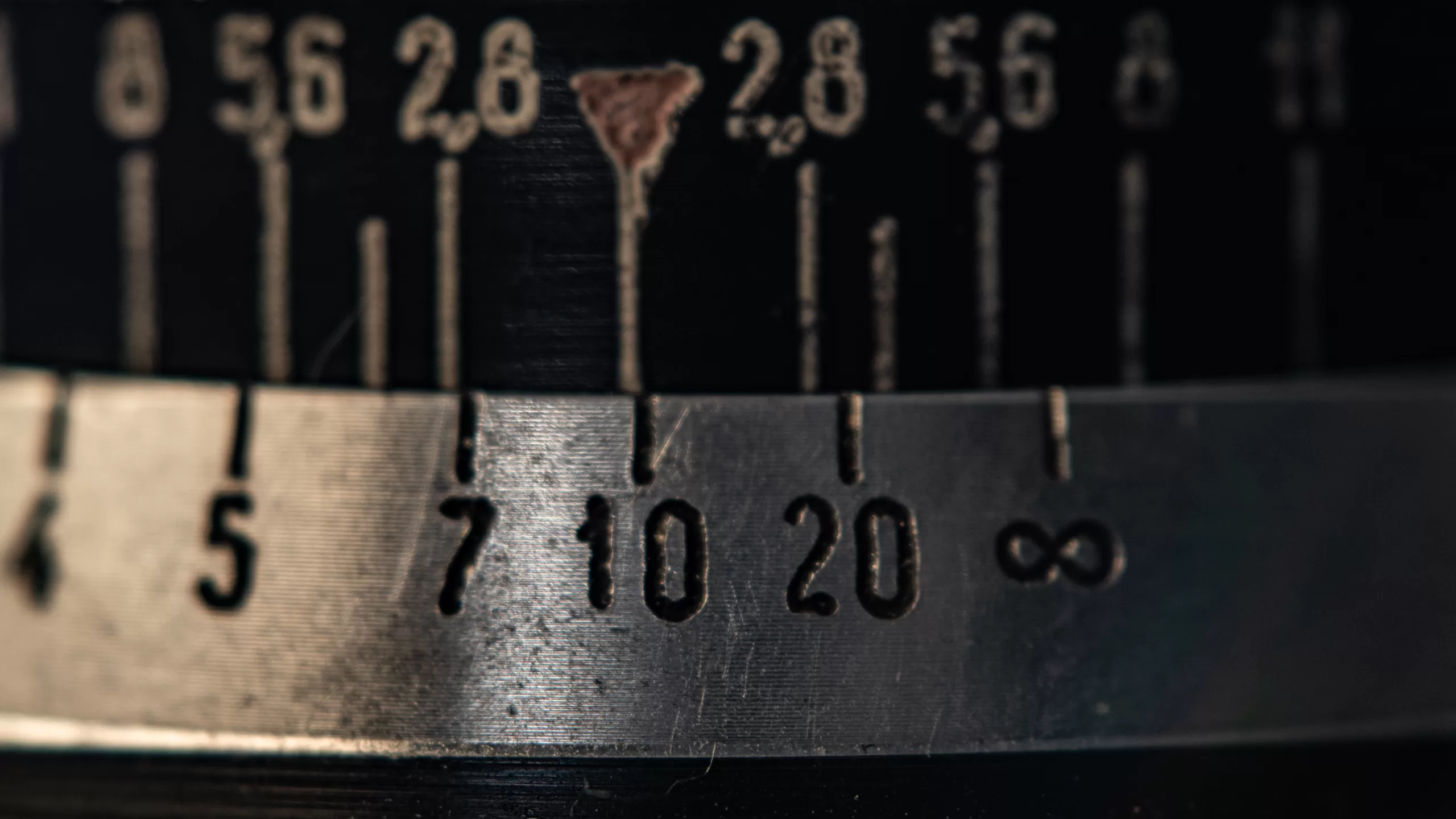
Get to know your aperture and don't miss this f-stop list in order to figure out what these numbers mean and what they do.
WHAT ARE f-STOPS
What Are f-stops? When you hear the technical answer you might be sorry that you asked.
The f-stop denotes the a size of the opening of the aperture known as the f-number. I swear I'm not messing with you.
Not helpful right. Well, the f-number is a ratio (the f-number is the number that we call f-stops). This ratio is the length of the lens divided by the diameter of the aperture.
This is why the long lenses that you see professional sports photographers use have a huge front element. For them to fit the equivalent of 4 times the diameter of an 800mm lens the diameter itself needs to be 200mm wide (at f4).
Why We Use F-Stops
We use f-stops because we know the size of the opening in the camera affects how much light strikes our sensor. We've actually known this since well before photography was invented.
As photography equipment began to be mass produced standards were developed. The Germans were on a standardization kick in the 19th Century and are credited with introducing the "stops" into lenses.
You can still buy lenses that don't click. In fact, many video creators prefer these because it allows them to adjust their aperture without making noise or having any shake of the camera. That being said, professional cinema lenses use T-stops.
T-stops vs. F-stops
T-stops provide a better idea of how much light is reaching our film or sensor. This precision is important in film-making because it effected the time the film was developed. With the arrival of digital film-making it's less important but traditions are traditions. Therefore, you'll still find professional movie lenses sporting T-stops.
Why Are F-Stops numbered the way they are?
The reason that f-stops are numbered the way they are is because we're measuring the diameter of circles. Those measurements tell us the amount of light that we are allowing in. They allow us to know our aperture.
The size of the aperture at those numbers is noteworthy because they tell us we are allowing in exactly half or twice as much light as the number on either side of them.
Understanding when we've doubled or cut in half the amount of light allows us to make easier to understand changes to our other exposure settings; shutter speed and sensitivity (ISO). Those other settings also are adjusted by halves and doubling. As a result we can change one setting and compensate for that change with another setting.
What f-stops Do
I already mentioned that f-stops control the amount of light. Too, they allow us to compensate for and adjust the other exposure settings. That's great stuff but they do more.
F-stops Help Determine Sharpness
Lenses are complex devices and the f-stop we use on our lens helps us to determine our photo's sharpness. It does this in two ways. First, the size of our aperture controls what we call our depth of field.
Depth of field is the amount of our scene moving away from the exact place we've focused on which is still sharp.
If we use a large aperture we allow a lot of light into our camera. Doing so gives us less depth of field. When we use a smaller aperture more of our scene appears to be in focus.
How f-stops affect depth of field
F-stops affect depth of field because of geometry. Light reflecting off of what is in focus all meets up at the same point on the sensor. Whereas, light from areas that are not in focus don't line up. These beams of light either pass each other or never meet because the sensor is in the way.
When we use a smaller aperture the angle at which those out-of-focus light particles miss meeting up is smaller. The smaller size means that these objects appear to be sharper.
The Other Role F-Stops Play In Sharpness
Our depth of field is not the only role that f-stops play when it comes to sharpness. Camera lenses are prone to imperfections. This is especially true closer to the edge where they're thinner. When we use a smaller aperture we eliminate the light that comes from these edge areas.
Smaller apertures are not always better. As we use smaller and smaller apertures we can begin to experience diffraction. Diffraction is a loss of sharpness caused by the bending of light rays.
Now You Know Your Aperture
At this point you now know your aperture and can control your f-stops with confidence. If you have any other questions be sure to reach out through the contact page.
Don Orkoskey
June 1, 2023
I'm full time professional event and headshot photographer Don Orkoskey. Since 2007 I've owned WDO Photography. Additionally, I teach photography in partnership with a number of amazing organizations as well as offering my own group photography classes and individual photography lessons. I teach classes for both adults and children and lead free nature photography meetups each month. I also write a monthly newsletter full of great information and maintain a list of free photography resources and have a YouTube channel to help you learn photography.
Related Photography Guides




Read The Latest Photography Articles on the WDO Photography Blog

Joy as Resistance: Moments of Connection & Celebration at Atlanta Pride
Atlanta Pride Parade and Festival resists weather and more, creating connection and celebration in these stormy times.
read more…

Written by Don Orkoskey
on October 15, 2026 at 5:23 pm

Why AI Headshots Are Backfiring for Atlanta Professionals (And What to Do Instead)
AI headshots still look unnatural on LinkedIn. Learn why authentic photography matters for professionals in Atlanta and globally.
read more…
Written by Don Orkoskey
on October 15, 2026 at 11:29 am

Professional Headshots Near Buckhead: How to Get Images That Actually Work for You
You deserve the best looking professional headshots and the best headshot photographer near Buckhead is WDO Photography.
read more…
Written by Don Orkoskey
on October 12, 2026 at 11:35 am

DeKalb County Park Portraits: Celebrating Community Style at the Forest Fashion Show
Beyond the runway: DeKalb County residents brought style and community spirit to Constitution Lakes during the Forest Fashion Show.
read more…
Written by Don Orkoskey
on October 5, 2026 at 12:15 pm
Comments
0 comments